
How to store asparagus properly
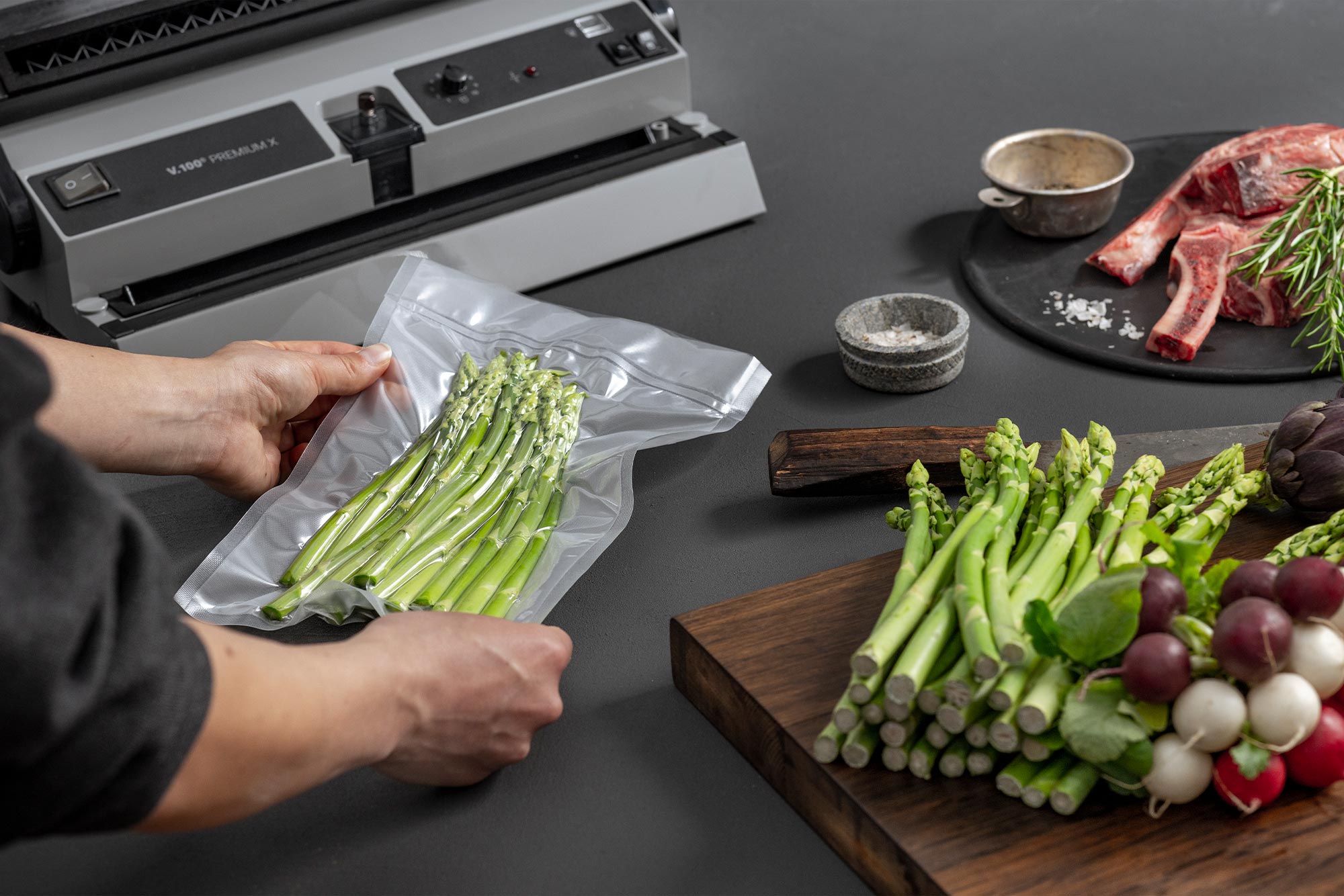
Asparagus is one of the most popular seasonal classics and ends up on our plates every year, fresh from the weekly market, farm shop or asparagus stall. Whether served traditionally with potatoes and hollandaise sauce, pan-fried, grilled or as a delicious side dish: fresh asparagus is a real treat.
To keep it crisp and flavourful, asparagus needs to be stored properly. After all, it loses moisture and freshness very quickly. We’ll show you three simple ways to preserve white and green asparagus: store it fresh, freeze it or keep it in a jar.
1. Vacuum-seal and freeze asparagus
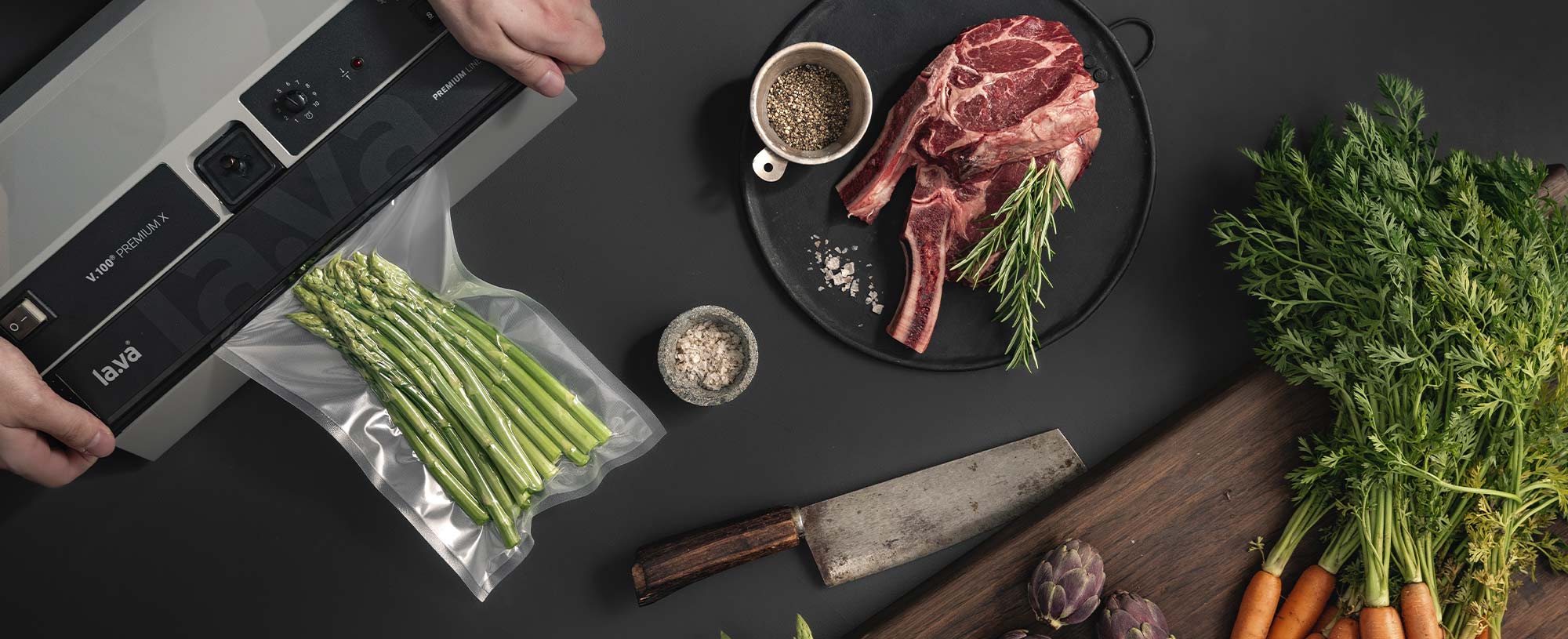
Have you bought more asparagus than you can use straight away? Then freezing is the best way to extend the season. It’s particularly handy if you vacuum-seal the asparagus first: it’s protected in an airtight seal, neatly portioned and can be stored to save space.
As vacuum-sealing removes the air, the asparagus is better protected against freezer burn, drying out and absorbing odours. The flavour, colour and texture are also preserved for longer.
Tip: The fresher the asparagus is when it goes into the freezer, the better the result will be later on. So don’t wait until the spears have already started to go soft; freeze them as soon as possible after buying them.
How to freeze asparagus properly
- Wash the asparagus thoroughly
- Peel white asparagus completely; peel green asparagus only on the lower third if necessary
- Cut off the woody ends
- Leave the spears whole or cut them into pieces
- Place in the vacuum bag in portions
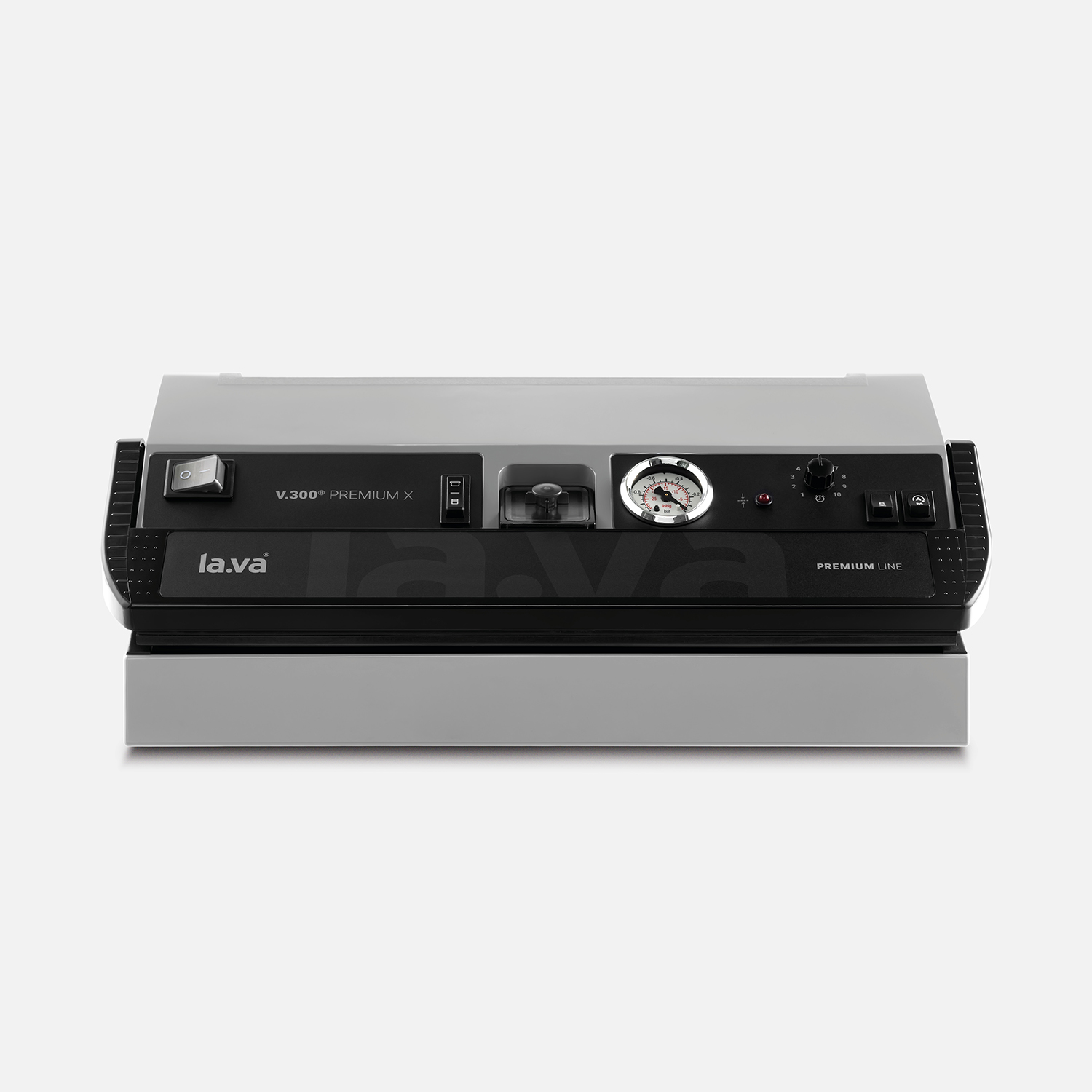
- Vacuum seal and seal airtight
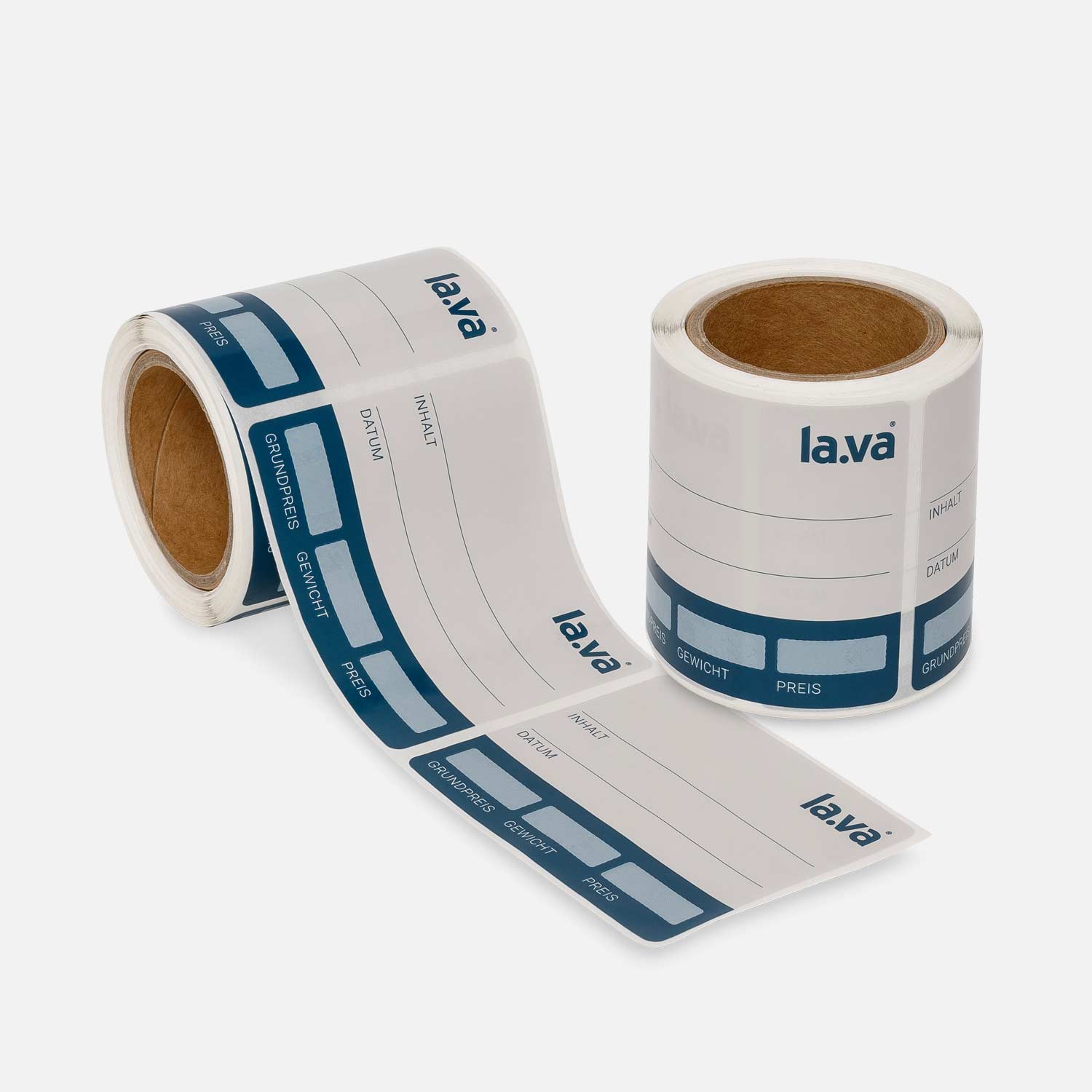
- Label with the date and freeze
How to cook frozen asparagus properly
You shouldn’t let frozen asparagus thaw slowly. Put it straight from the freezer into boiling water, a frying pan or a steamer. This helps to preserve its texture and prevents the asparagus from becoming unnecessarily soft.
Ideal for: stocking up, meal prep, extending the season
2. Storing asparagus in a vacuum container
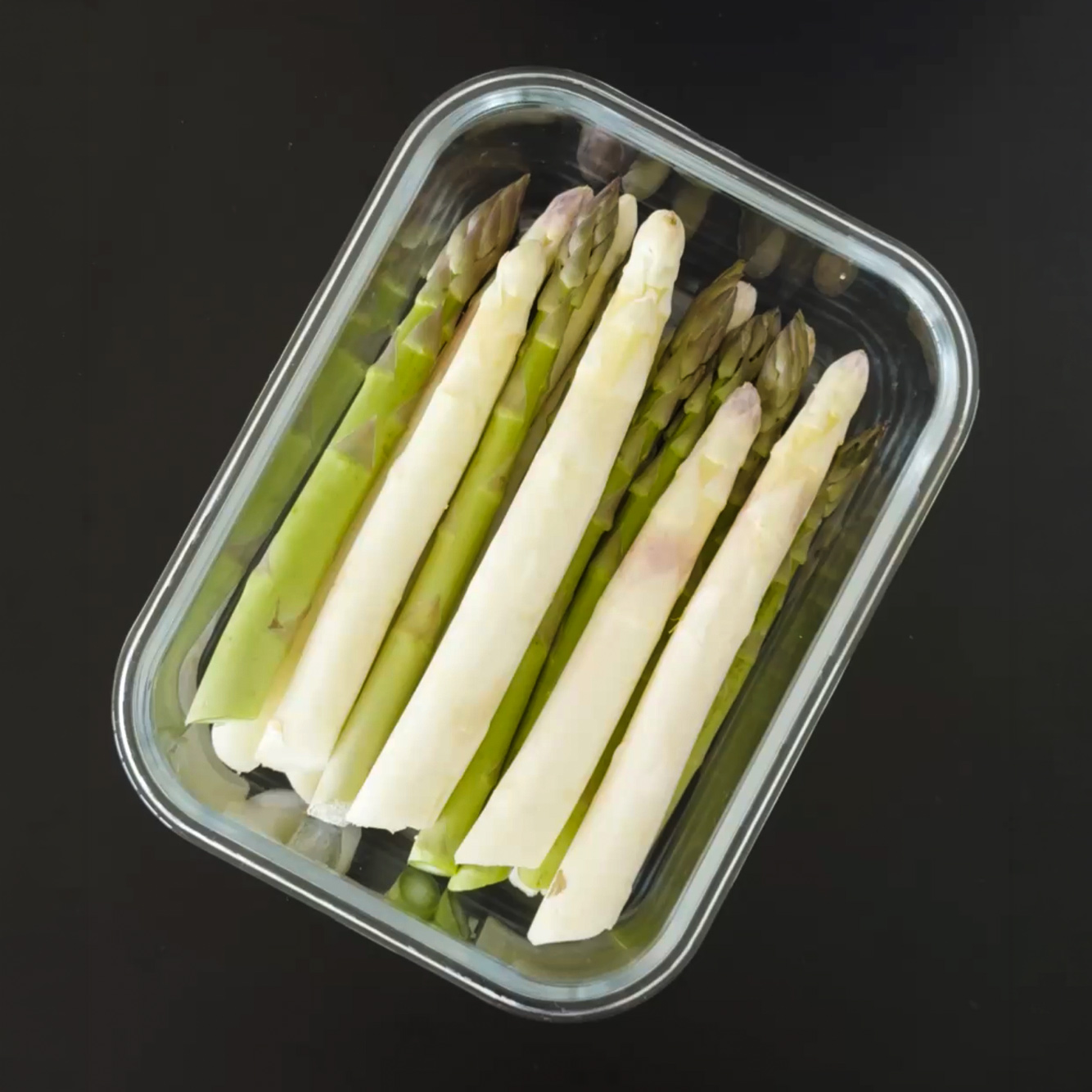
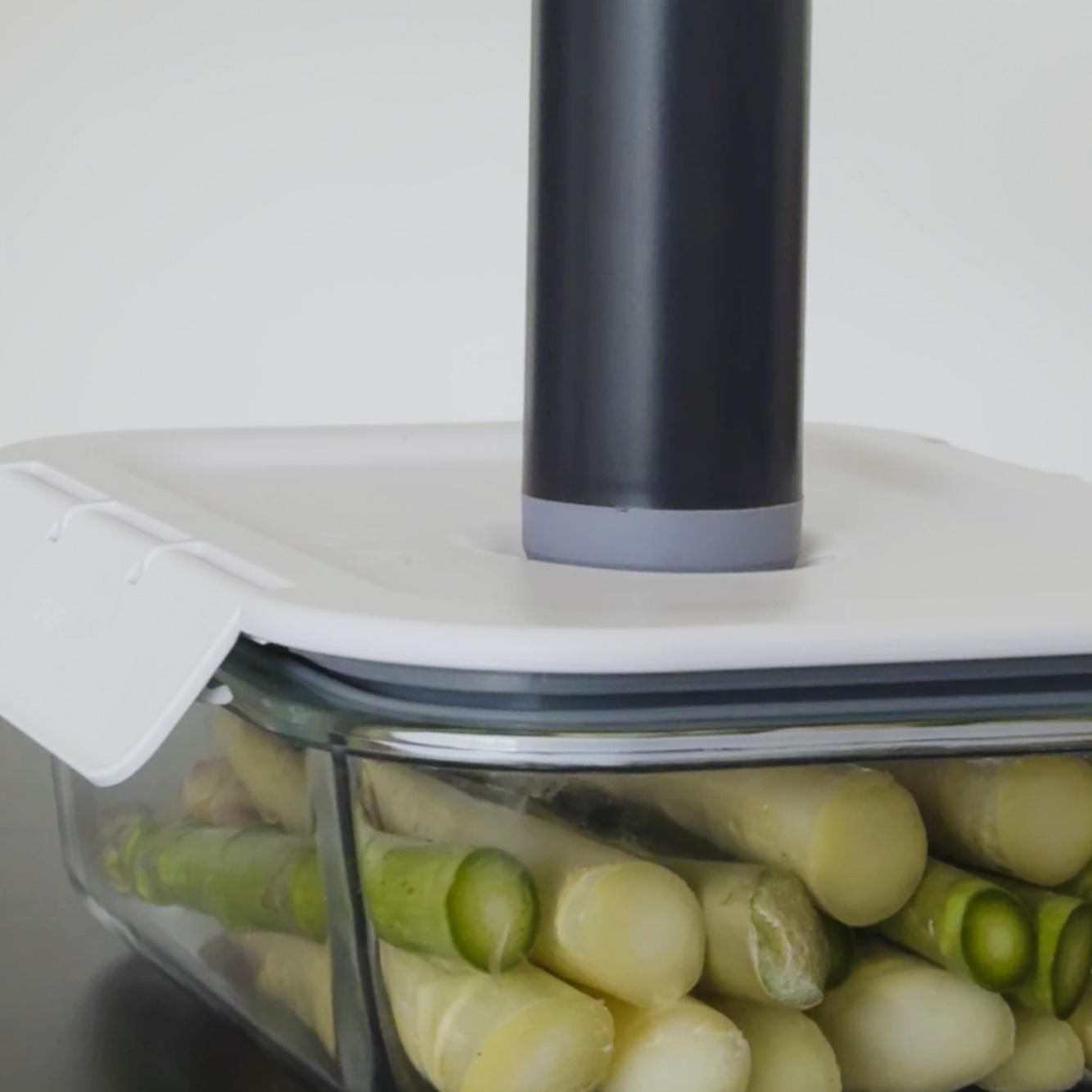
As well as vacuum-sealing it in a bag, you can also keep asparagus fresh in a vacuum container. This is ideal if you’ve already prepared it but don’t want to freeze it straight away. That way, it stays within easy reach in the fridge for the next few days and stays fresh for longer.
The Lava G-Line glass vacuum containers are particularly well suited for this. They are suitable for the fridge, freezer, microwave and oven, and can be easily cleaned in the dishwasher after use.
How it works
Prepare the asparagus as usual: peel white asparagus, peel the lower third of green asparagus if necessary, and trim off the woody ends. Then pat the spears or pieces dry and place them in the glass container. Next, seal the container using either an electric or manual hand pump, or a Lava vacuum sealer.
This ensures the asparagus is stored safely and stays fresh in the fridge for longer than if left uncovered. This method is particularly handy for pre-peeled asparagus, asparagus pieces for stir-fries, or pre-prepared portions for dinner.
 |  |
3. Storing asparagus in a jar
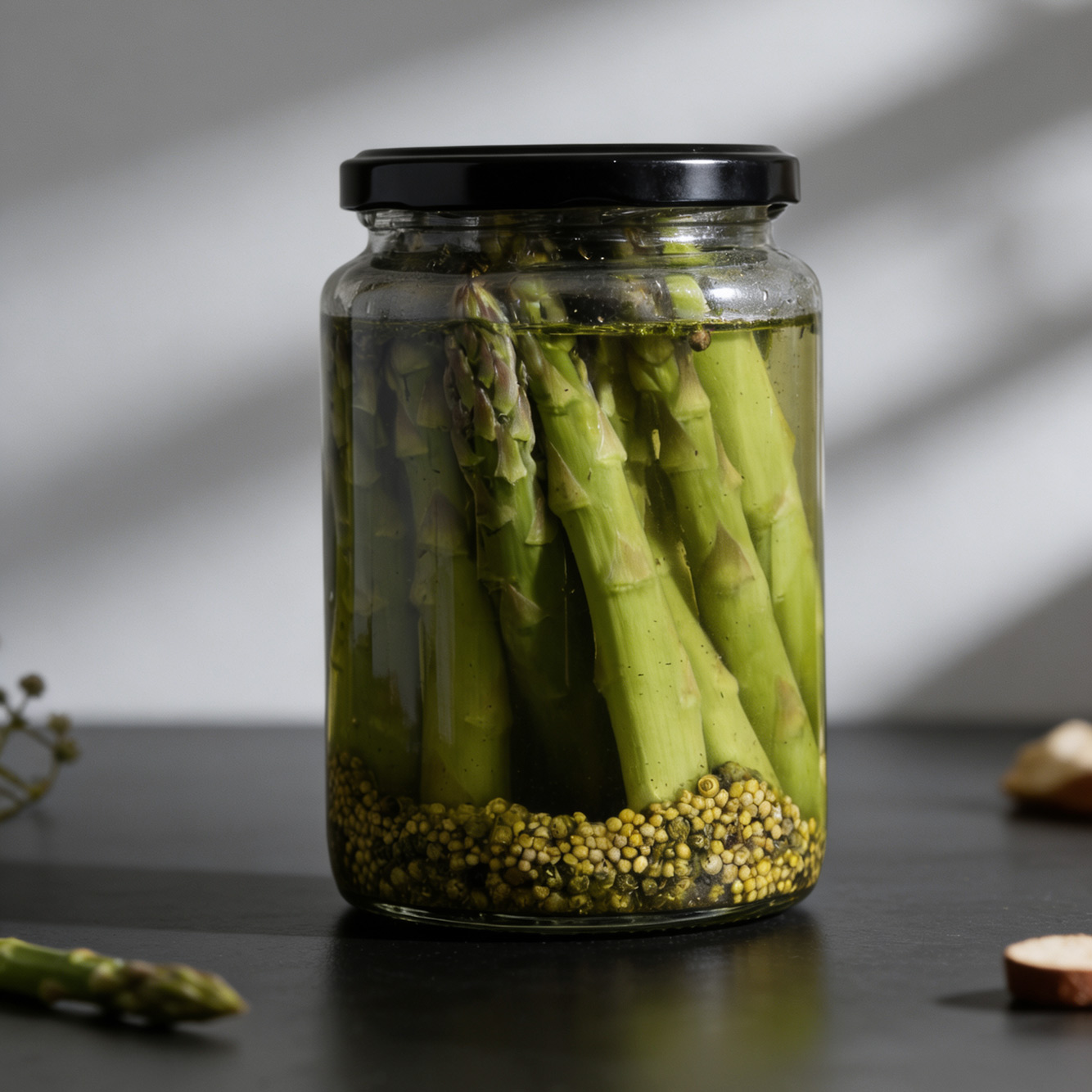
If you want to do more than just preserve your asparagus – if you want to enhance its flavour too – pickled asparagus in a jar is a brilliant idea. With a bit of vinegar, spices, herbs and a little time, you can create a delicious supply that goes perfectly with snacks, salads, antipasti, fish, meat or barbecued dishes.
Recipe: Pickled asparagus in a jar
Ingredients
- 1 kg white or green asparagus
- 250 ml vinegar (e.g. apple cider vinegar or white wine vinegar)
- 250 ml water
- 1 tbsp sugar
- 1 tsp salt
- mustard seeds
- peppercorns
- garlic
- dill
- optional: lemon slices
Method
- Wash the asparagus, trim off the woody ends and peel the white asparagus thoroughly
- Cut the spears to fit the size of the jar
- Blanch the asparagus for 3–5 minutes, then plunge into ice-cold water
- Bring the water, vinegar, salt, sugar and spices to the boil to make a brine
- Layer the asparagus tightly in sterile jars
- Pour the hot brine over the asparagus so that it is covered, leaving about 1–2 cm of space at the top
- Seal the jars and leave to cool. As they cool, a vacuum forms inside the jar
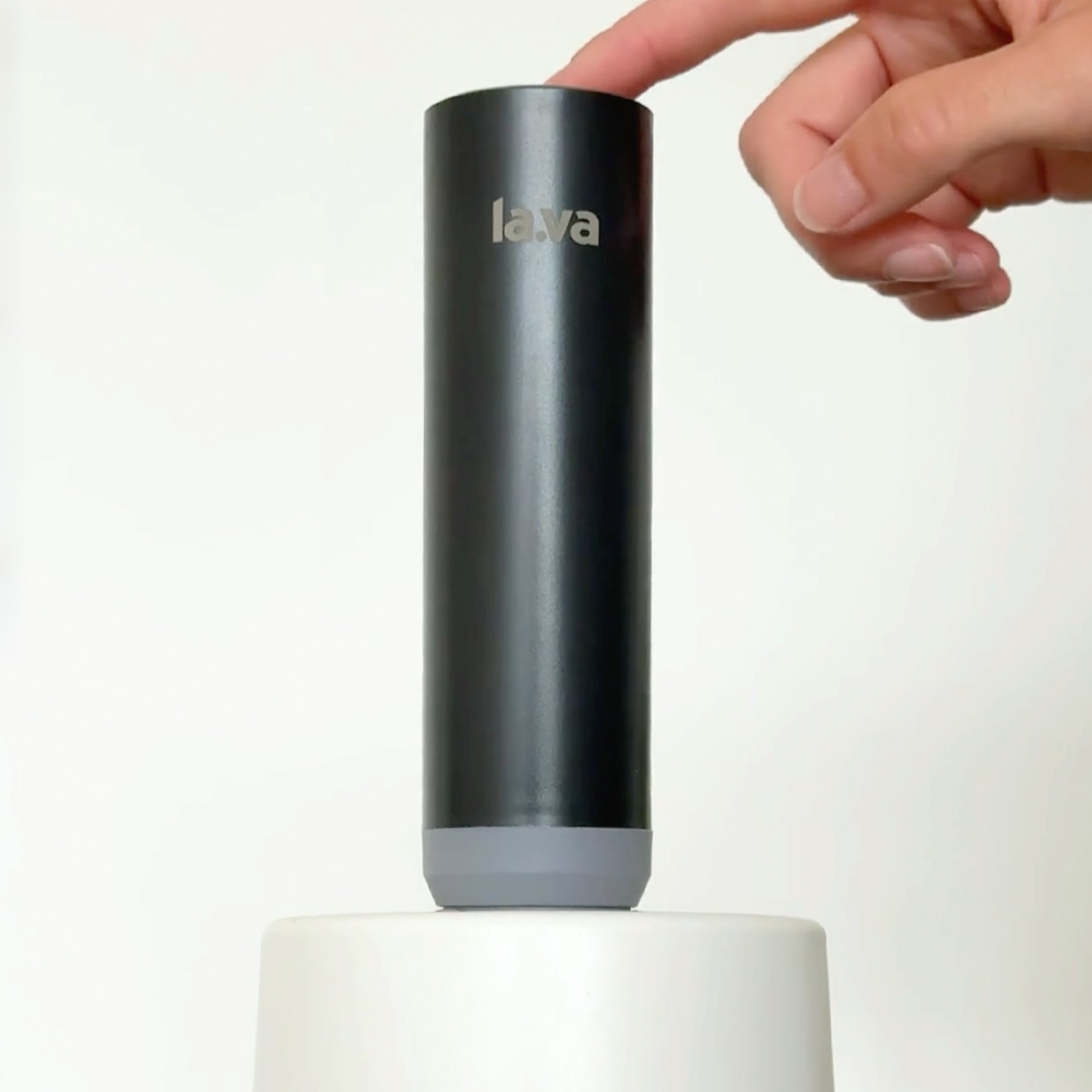
- Optionally, vacuum-seal the cooled jars using the Flex jar sealer
- Store in the fridge
Ideal for: pickled asparagus, antipasti, salads, side dishes
 |  |
White or green asparagus: what’s the difference when it comes to storing them?
White asparagus is more delicate and should always be peeled thoroughly before freezing or pickling. Green asparagus is less fiddly: it’s often enough simply to trim the ends and peel only the lower third if necessary.
For short-term storage: white asparagus keeps well wrapped in a damp cloth, whilst green asparagus stays particularly fresh when stored upright in a little water.
Conclusion: It’s worth storing asparagus
Whether white or green, asparagus can be stored in far more ways than many people realise. For a few days, simply storing it in the fridge is sufficient. If you want to keep it for longer, it’s best to freeze asparagus in portions – ideally vacuum-sealed. And if you love flavourful preserves, you can pickle asparagus in jars.
This is an easy way to extend the short asparagus season and ensure you still have high-quality asparagus to hand later on – neatly prepared, well protected and portioned just right.
Our product recommendations
Related products
€449.00
incl. VAT
+€70 starter kit
+€70 starter kit


.svg)
.svg)

